


In the planner world, August is known to many as both an evaluation and forward-thinking period. It’s the season for deliberating which planners and notebooks worked in the last eight months as you chart what will carry over or change in the following year. Tinkering, toiling, and screenshotting the Hobonichi preview site is August at its best.
As I write this, I’m wholeheartedly in the techo kaigi (手帳会議) headspace. The Japanese term translates to “planner meeting” or “notebook conference.” My entire 2026 lineup consists of Japanese planners and notebooks: Traveler’s Notebook, Hobonichi, and Plotter. As these companies and others begin to slow drip, tease, or full fledge drop their 2027 collections for you to cast a deciding eye over, I’m here to share my creative-writing-specific techo kaigi to help others navigate what has become an ever-expanding conveyor belt of options.
It’s worth noting this article is not the space where I hand-over-heart declare a specific product a “must buy” to achieve similar success because, frankly, these items are all variations of bound pieces of paper. Instead, I’m focusing on the writerly systems I’ve constructed over time and why they work for me.
THE LITTLE LITERARY LOG THAT COULD
Bury me with my current literary log. That way, no matter the afterlife circumstance, I’m equipped for anything—including a conversation with Shirley Jackson wherein I share my process for writing a short story inspired by one of hers that’s not even a quarter as gripping.
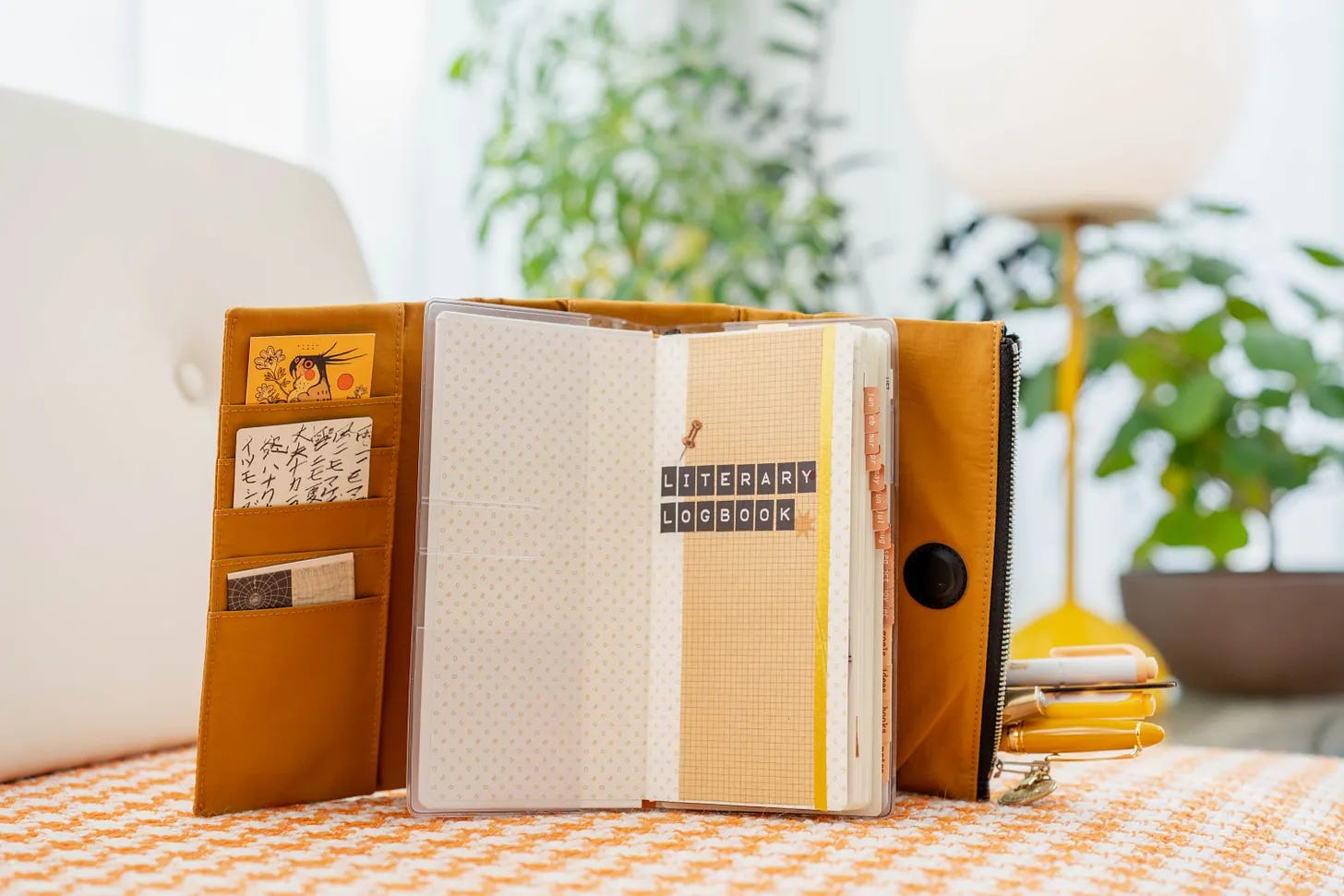
Around this time last year, I decided to log the following in one designated place throughout 2026:
When I worked on my writing
Ideas for stories or Substack articles
Interesting literary mags to submit to
Creative roadblocks and reflections
Literary goals
My reflex was to reach for a planner over an undated notebook so that I could easily create a calendar-based overview of my progress. By year’s end, I envisioned holding a marked-up planner that could tell the story of twelve consistent months. Having previously used the Hobonichi Weeks as a personal planner, I embarked on somewhat familiar territory when building out the framework needed for this type of dedicated “Literary Log.” I fashioned the month view to simply state the title(s) of what was worked on each day, the week view to get into the minutiae of observations or how things were tracking, and the back blank pages act as a repository of lit mags, ideas, longer-winded rants and, of course, my big, idyllic goals.
I’m officially over the halfway mark with this 2026 literary log and I’m thrilled to report it’s been my trusted every day carry. Rarely am I without it or far from it. I attribute the success to its compact size—it’s both light to carry around and small-paged enough to not be cumbersome to fill out. It’s never been a chore; in fact, I look forward to the start of a new week when I can add my strip(s) of washi on the right-hand side as decoration. On the best weeks, the washi selection relates to what I’m actively working on or currently experiencing, e.g., moon washi when I received my first literary mag acceptance from a magazine called A Curious Moon.


I knew from the outset I wanted to carry the lit log alongside my personal planner, which was made possible by Hobonichi’s Tragen. While designed with one Weeks planner in mind, I’ve had no problem keeping two inside the Tragen, in addition to a couple fountain pens, midori highlighters, and ruler in the zipped pocket. This harmonious trio (two Hobonichi Weeks inside a Weeks-sized Tragen) will undoubtedly be replicated in 2027.
Where I lost steam was with the Field Notes I put in the back slip pocket of the Tragen. Intended to be my dumping ground for passing, non-crystallized notes related to a larger writing project of mine, it ended up going unused for months. It’s possible I’ll pick the habit back up, but because I shelved the writing project it’s associated with, it’s not a 2027 sure deal like the two Weeks system proved to be.
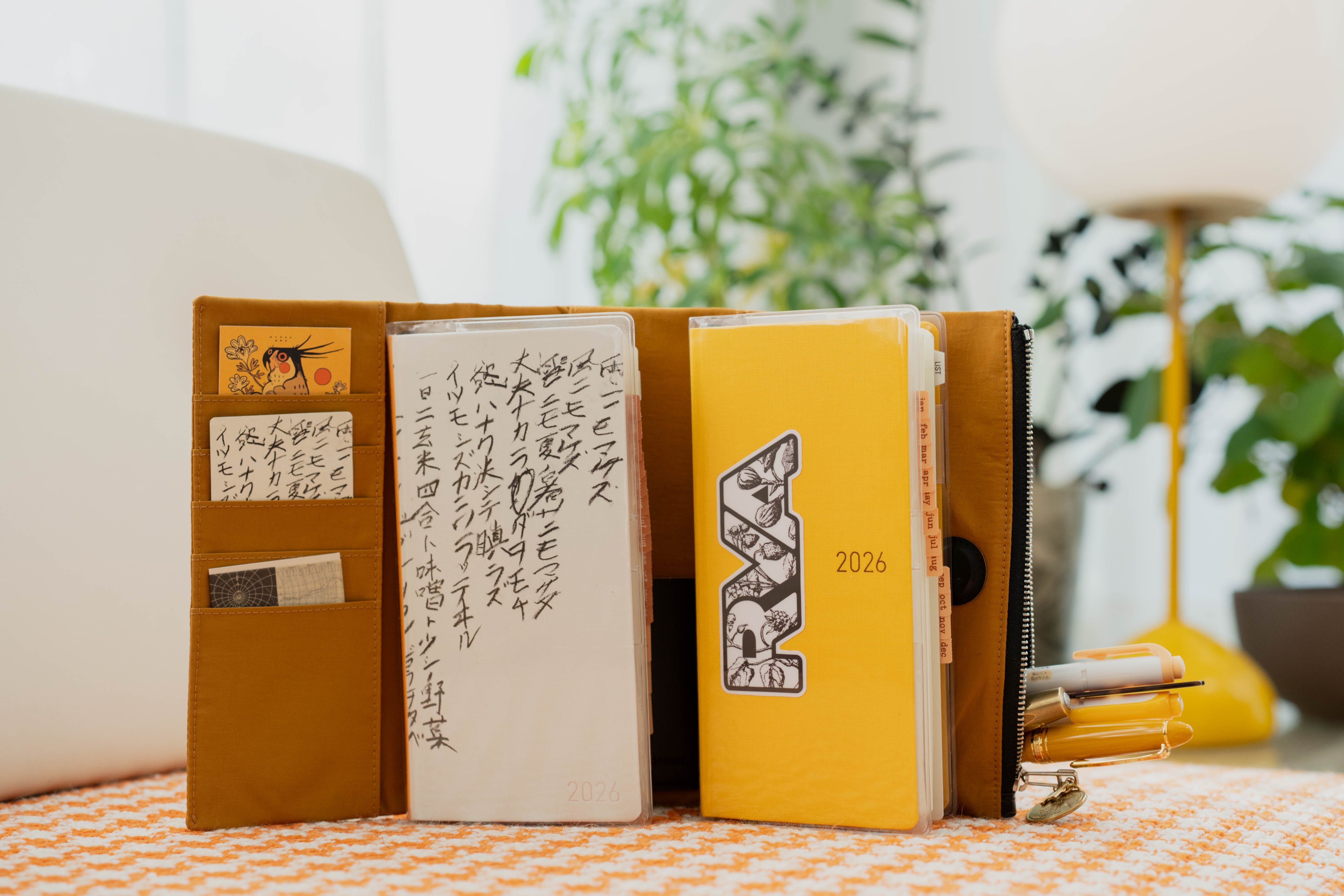
Alternative ways to replicate my literary logbook to accommodate your lifestyle:
Traveler’s Notebook: 017 Free Monthly Diary in combination with either the 019 Free Diary (Weekly + Memo) or 018 Free Diary Weekly Vertical if freedom from preset dates is more your speed, though they do offer dated inserts too.
Field Notes: For those who want something even smaller and simpler, look no further. You could designate the first twelve pages as monthly pages and use the rest as is.
Ring binder systems: Plotter, MeePlus, WuzhiStudio, and Filofax provide an interchangeable, lightweight option for those who crave moving pages in and out.
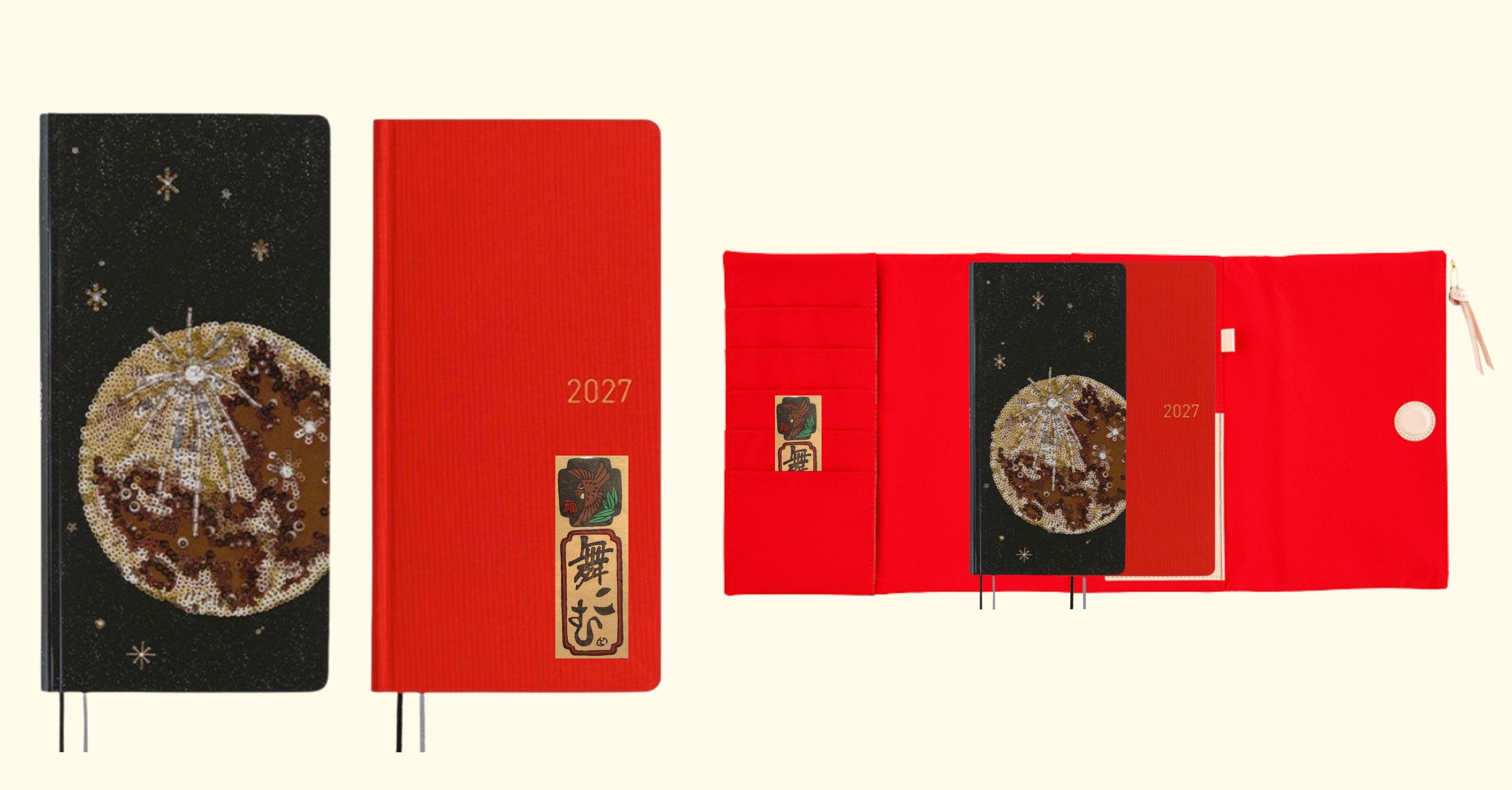
If the Hobonichi Weeks layout does strike your fancy, do I have news for you! Hobonichi releases their lineup in daily reveal style throughout the month of August. Basically, it’s become an advent calendar for stationery nerds (hi). If you’re reading shortly after this post went live, you can join me and the growing Hobonichi fanbase during this period of multi-week excitement as new designs and artist collaborations are announced. Check the Hobonichi 2027 Preview Forest website at 10 PM EST for the latest drop. At the moment (August 18) I’m smitten with the tanakadaisuke moon Weeks and am hard pressed to think anything else will become my 2027 literary log. The Poppy Red Weeks is a contender for my personal planner, but this is the one that’s likely to be dethroned depending on what other releases come out and pair well with the moon design.
THE COMPELLING NARRATIVES NOTEBOOK
If you read my “Building a Writers Notebook” Substack post from nearly a year ago (essentially a 2025 techo kaigi), you might remember the intentions and purpose I’d set for this “Compelling Narratives” notebook.
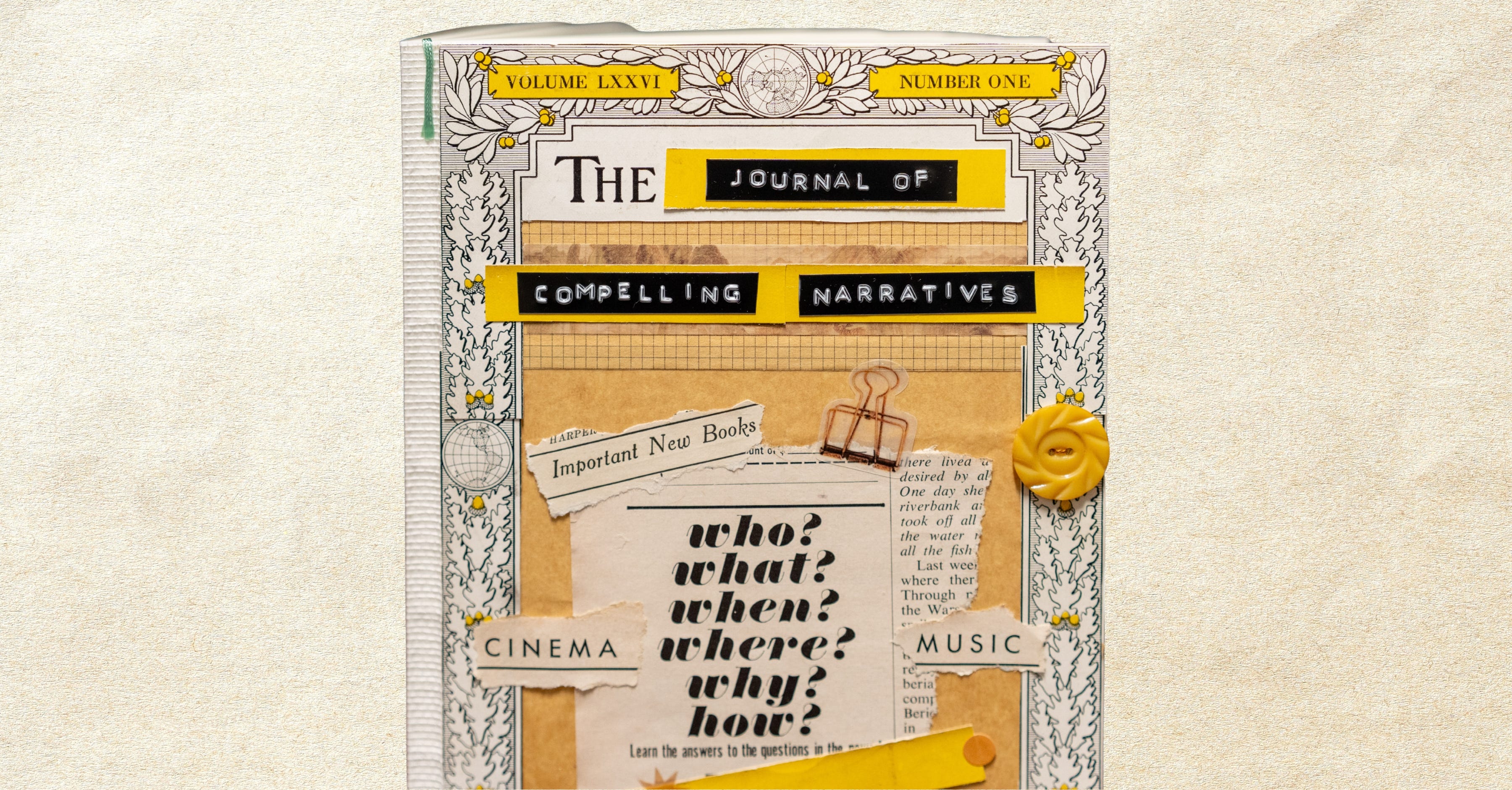
It even inspired one of the categories of my Substack by the same name, whose posts always include the following introduction:
Anyone studying the craft of story will tell you there is an inherent architecture to the process. Some swear by a particular narrative structure, others emphasize development of character, and there are those who hark on conflict as a cornerstone. All will answer differently when asked to provide the binding agent for successful and enduring stories. In my Compelling Narratives notebook, I seek an answer of my own by deconstructing stories that stick.
In September 2025 I set out using a yellow A5 dotted Semikolon notebook that I picked up locally at Merrymaker. Unfortunately, I came to realize thick, hardcover notebooks don’t bode well for long writing stints. I’d become accustomed to no fuss, lay-flat notebooks. By January 2026 I’d had it; the Semikolon became relegated to being my quick notes, ink swatching, and practice area before putting everything down in its final form in my Compelling Narratives 2.0 notebook: a trusted Midori A5 MD dot grid notebook.


By that point in the shuffle, I’d also come to crave a customized cover with my typical cutouts, stickers, and photos, a habit I picked up and cherish doing for my Traveler’s Notebook inserts. With this second attempt at a Compelling Narratives notebook, I made a point of going bold. Using leftover materials found at SCRAP RVA, a non-profit creative reuse store, the end result is something to behold and cost me roughly $4 in materials. With the Midori notebook being undated and not entirely filled out yet, it’ll seamlessly carry it over into 2027.
Alternative ways to replicate my literary logbook to accommodate your lifestyle:
Any notebook can be transformed into a Compelling Narratives notebook with as little as a title page. While I can confirm Midori is a wonderful choice, Stalogy, Sterling Ink, Baum-kuchen x Traveler’s Notebook larger grid insert, and Hobonichi’s Day Free notebook all offer their own pros. Consider size, paper quality, portability, page formats (dot, lined, grid), and binding styles—Traveler’s Notebook offers a nice variety of spiral notebooks for those interested.
TO WRITE IS TO OBSERVE | COMMONPLACING
Speaking of Traveler’s Notebooks, I’d be remiss to leave them out of the conversation talking about my creative writing process. Where my Hobonichi Weeks are structured, planner-oriented workhorses, my Traveler’s Notebooks (TNs) serve as easy going, modifiable grounds for exploration. At their core, TNs are adaptable. They allow the user to interchange the guts of the leather cover using slim notebooks, typically containing between 32 and 64 pages. This makes for speedier notebook completion which, to me, is always gratifying.
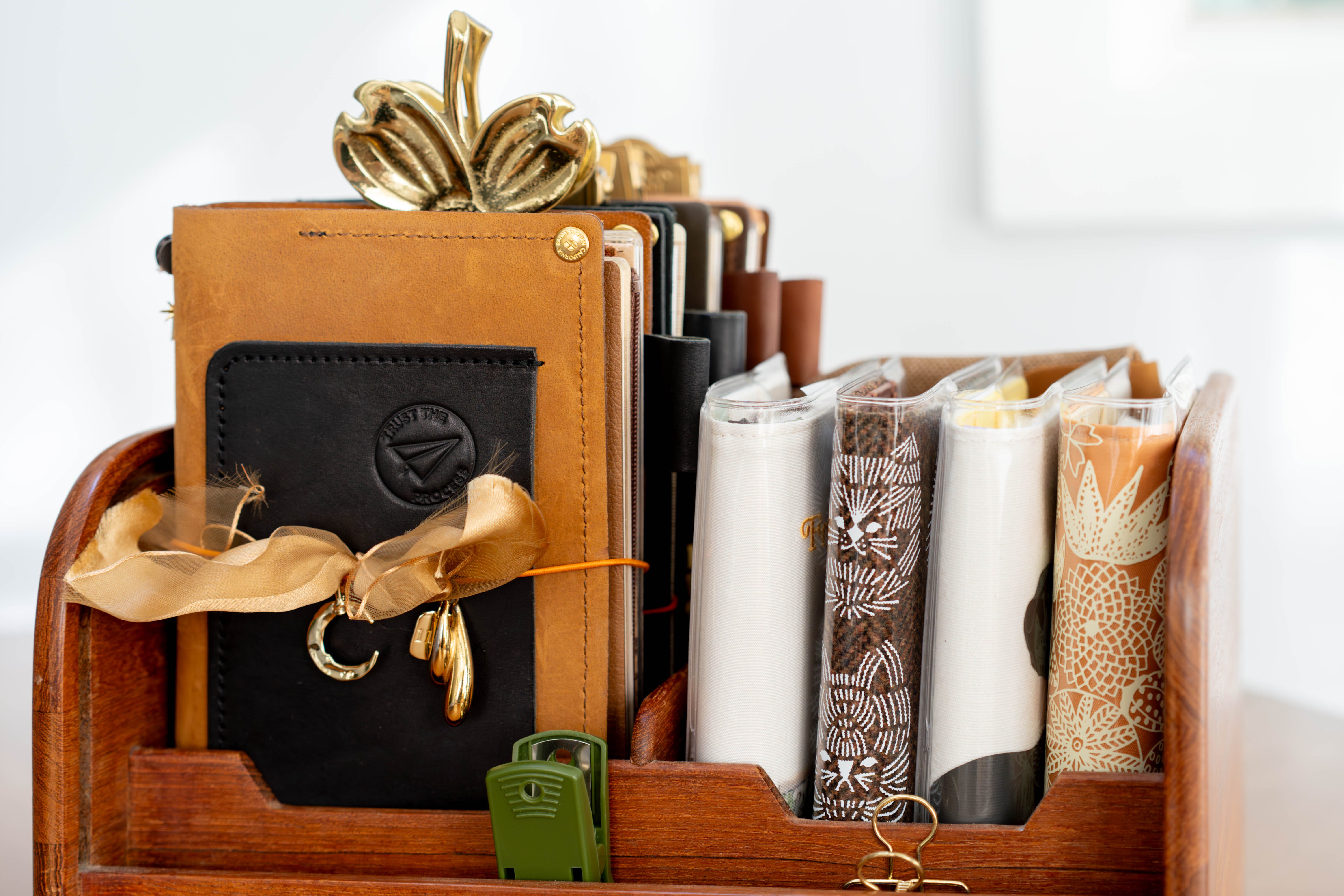
Over the years, my TN collection grew until I hit a sweet spot with four regular sized covers of varying colorways. The Camel TN was my gateway back into notebooks in my late 20s and, on several occasions, shifted roles to meet my ever-evolving needs. Its resume includes memory keeping and reviewing catch-all (local restaurants, vintage shopping, gardening, and media) to now housing my commonplace notebook and 031 Sticker Release Paper.
I became a commonplacing convert after seeing wordlayout demonstrate her approach in June; shortly after, I created a “Findings and Fixations” Sterling Ink TN-sized notebook as my take on the popularized commonplace notebook. Here, I wax poetic, drop research learnings, and transcribe quotes from whatever I deem interesting at the moment. Given that the Sterling Ink notebook has 272 pages—well over the standard TN insert—the goal is to use this for a couple years until complete.


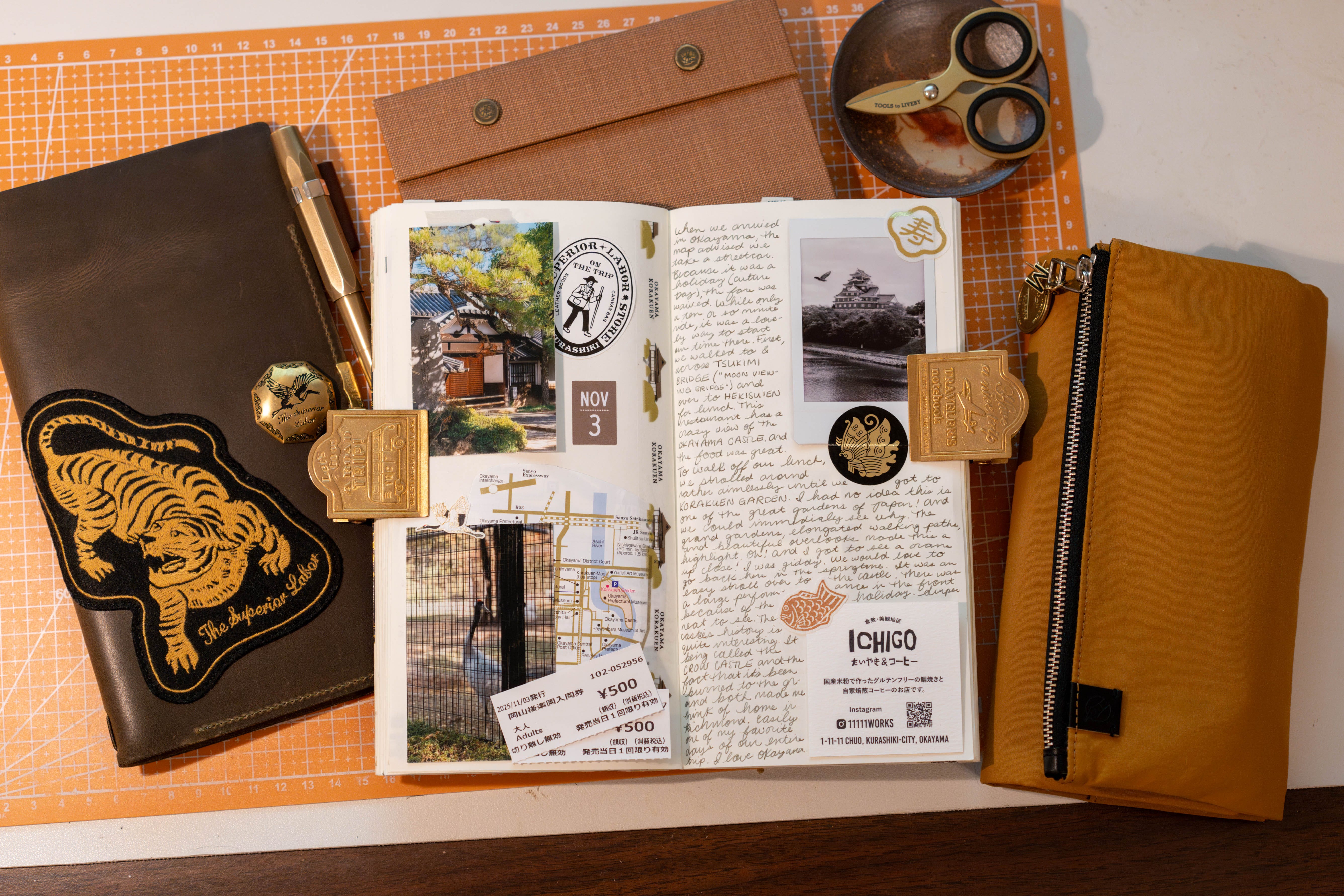
My Black TN was first used as the notebook I took while traveling—the original intention of the Traveler’s Notebook product. It’s what came with me to Japan last fall and kept all my eki stamps and ephemera in one place. The spread below from my Japan travel insert was lucky enough to be recently featured in vrk’s stationery magazine called Pouch!
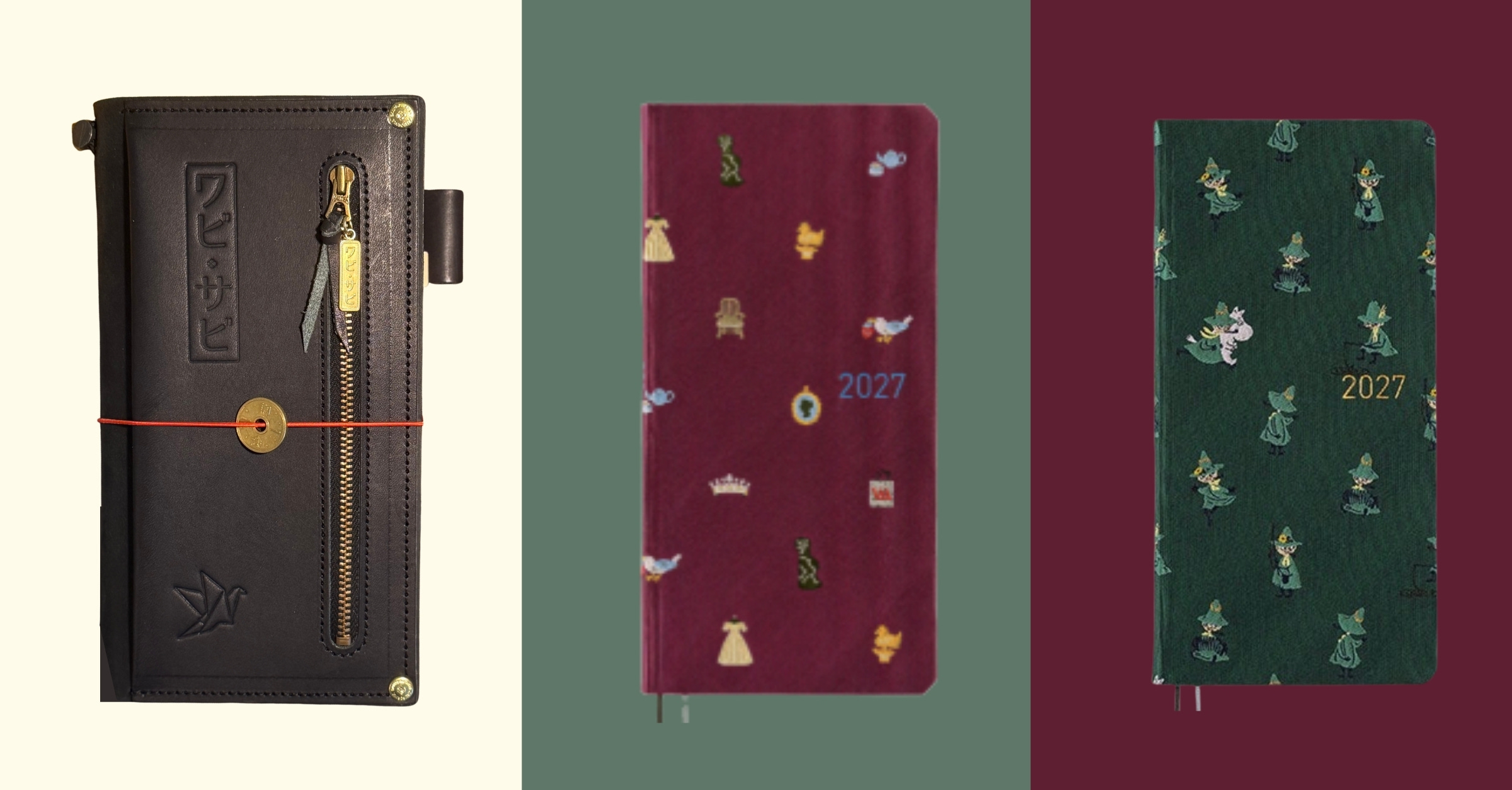
For 2026, this Black TN shifted gears to be my media logging companion. After diagnosing a need for more pages than a TN insert provided me in 2025, I opted for (surprise) a Hobonichi Weeks to stow inside. What can I say, the Weeks structure speaks to me. Plus, the concept of a Junji Ito Tomie Weeks as a media log couldn’t have been more fitting—I love Junji Ito. In this Weeks are my thoughts related to novels, novellas, short stories, tv shows, museum exhibits, and movies. Behind the Weeks is a TN 002 Grid Notebook for tracking only Studio Ghibli movies and anime. Hoping to finally complete my Ghibli watchlist by year’s end!
As I brainstorm my 2027 media log Weeks for the Black TN, I’m currently torn between the green Moomin option (A Day in the Life of Snufkin) and the Victoria and Albert Museum collab’s Welcome to the V&A.
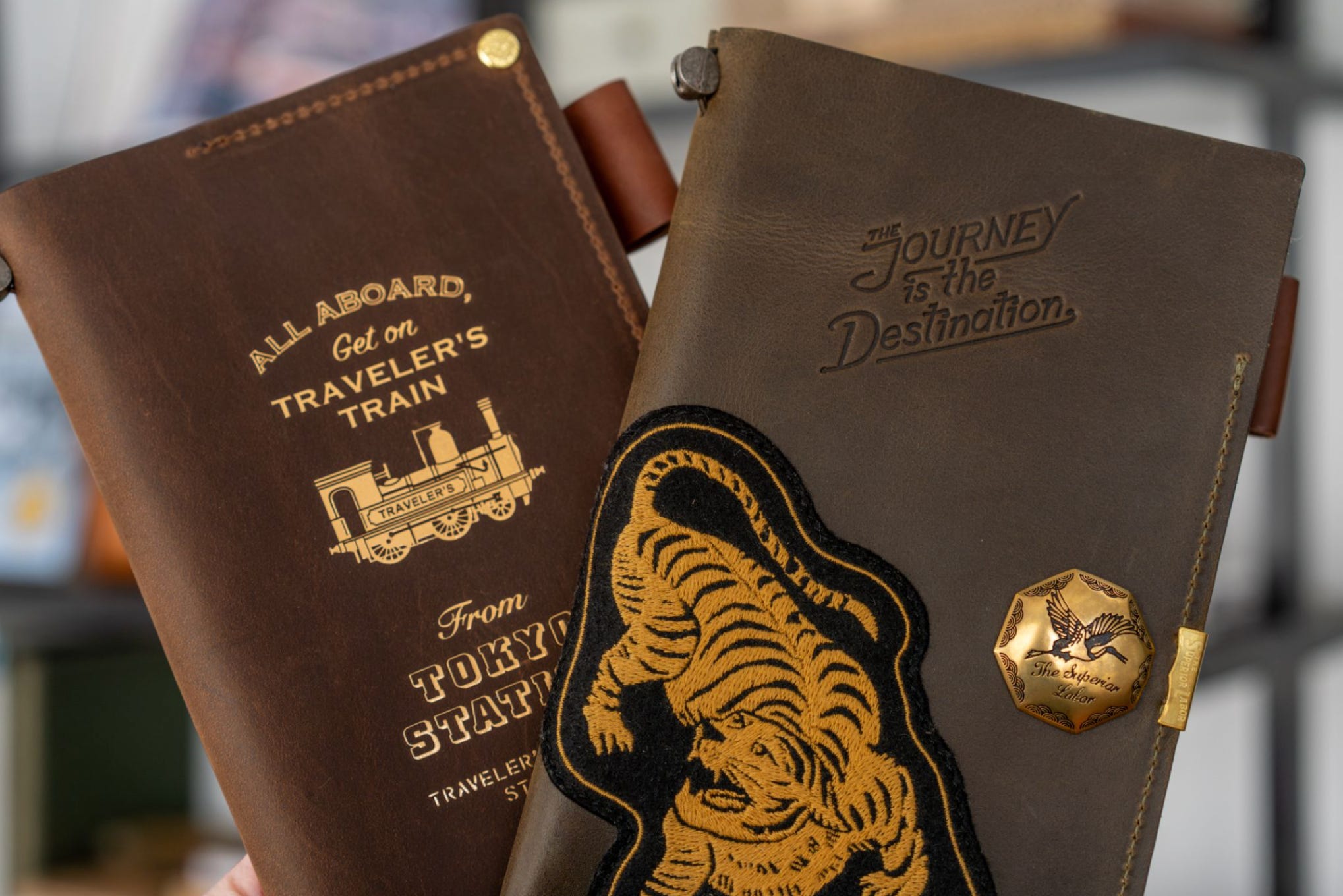
The last two TNs are ones I bought while in Japan. The limited edition train cover holds what I call my “Conductor’s Log”—essentially a diary for ranting, raving, or simply reflecting on things in my personal orbit. The Olive TN is one of the most precious, sentimental items I own because I customized the cover at The Superior Labor store in Kurashiki, Okayama. I plan to share a Substack post on TN customizations soon, which is fitting now that TN released their 2027 theme: Every TRAVELER’S notebook is unique and that’s wonderful. My Black TN’s role of once functioning as my travel TN has been inherited by the Olive TN in 2026. The Olive TN trekked across the states this summer, following me to both California for my sister’s graduation and NYC for Yoseka’s Stationery Fest (more on this soon). All four of these TNs will remain in rotation next year. I have no intention of buying additional TN covers seeing as each one serves a specific purpose within my lineup and continues to prove resourceful and reliable.
Should you have any questions related to creative writing, stationery, new releases, my lineup, or your personal techo kaigi, I’m happy to respond in the comments!
Full on back-to-school vibe!